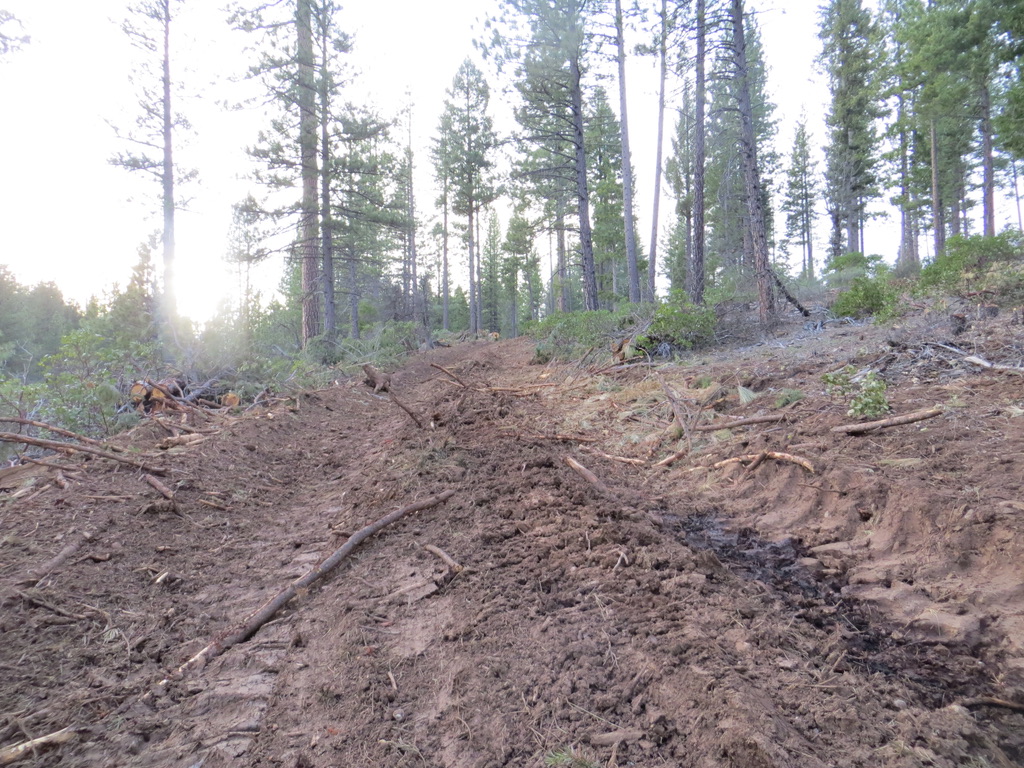
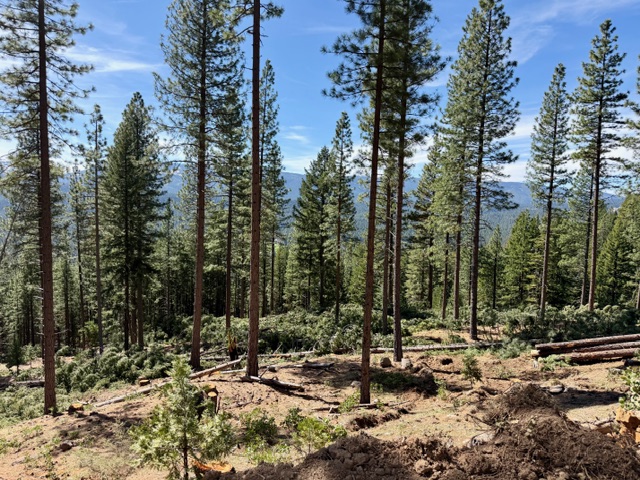
UPDATE MARCH 30: Reports have come in over the weekend of intense industrial logging NW of Blaisden, CA going on now…
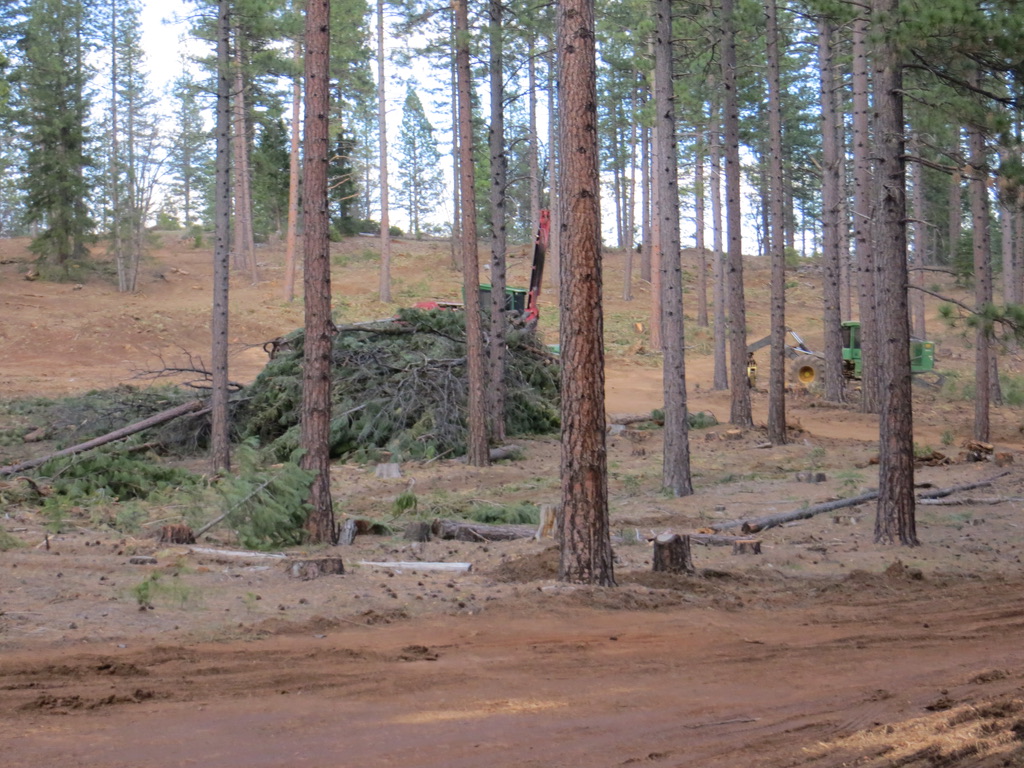
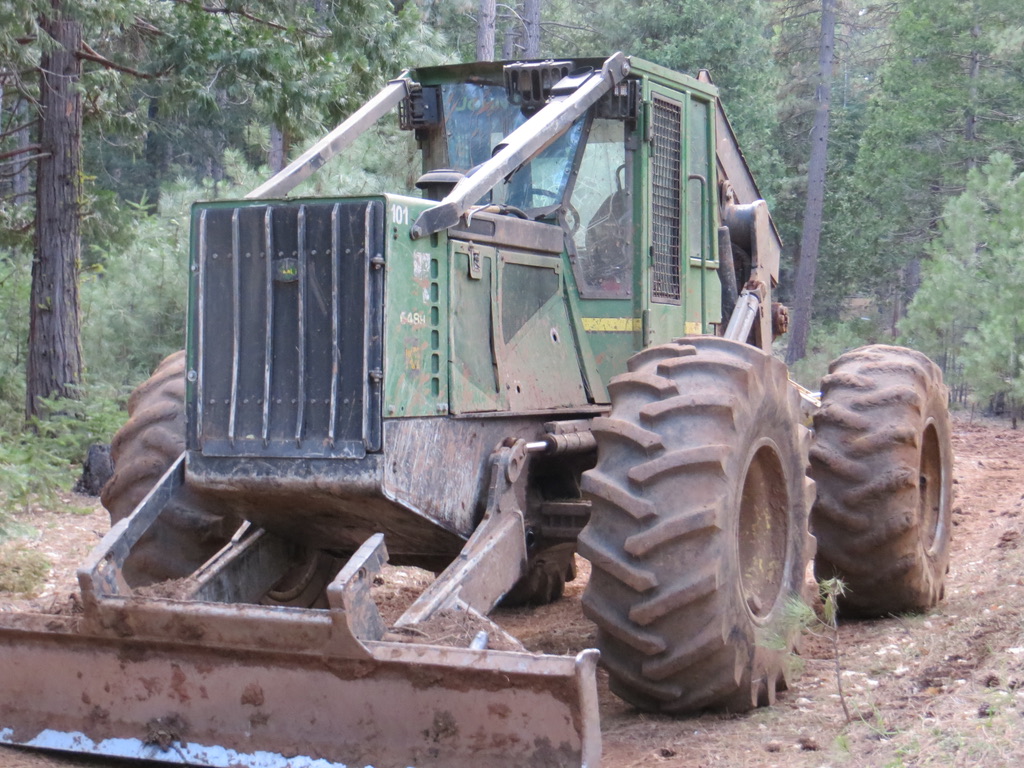
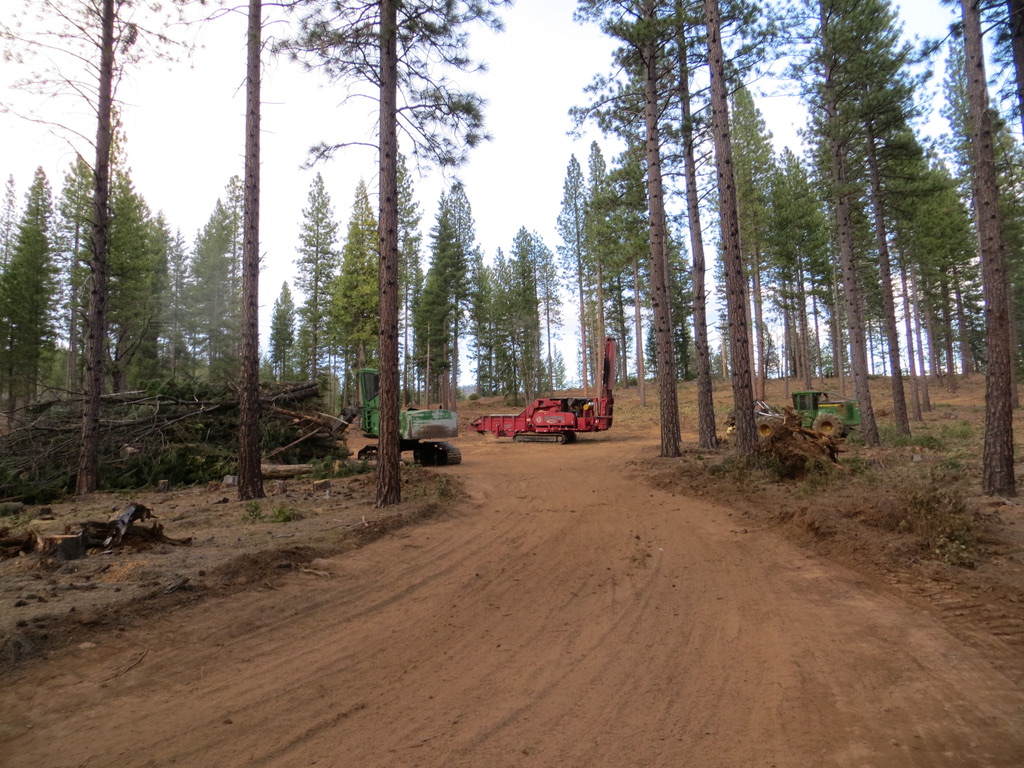
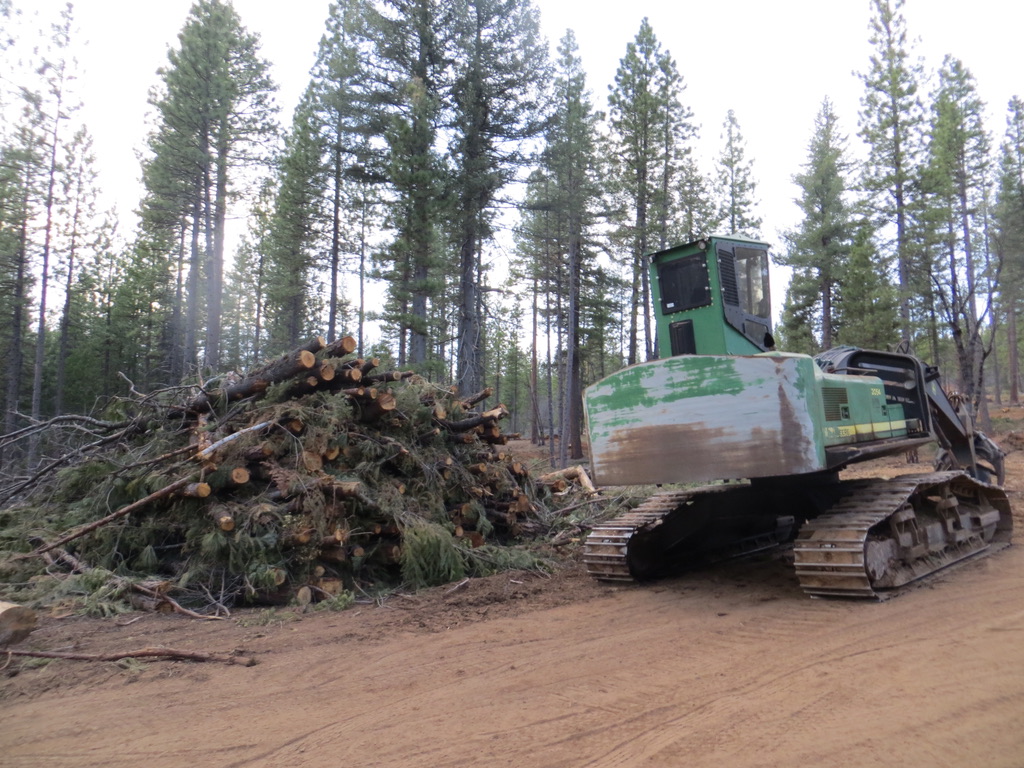
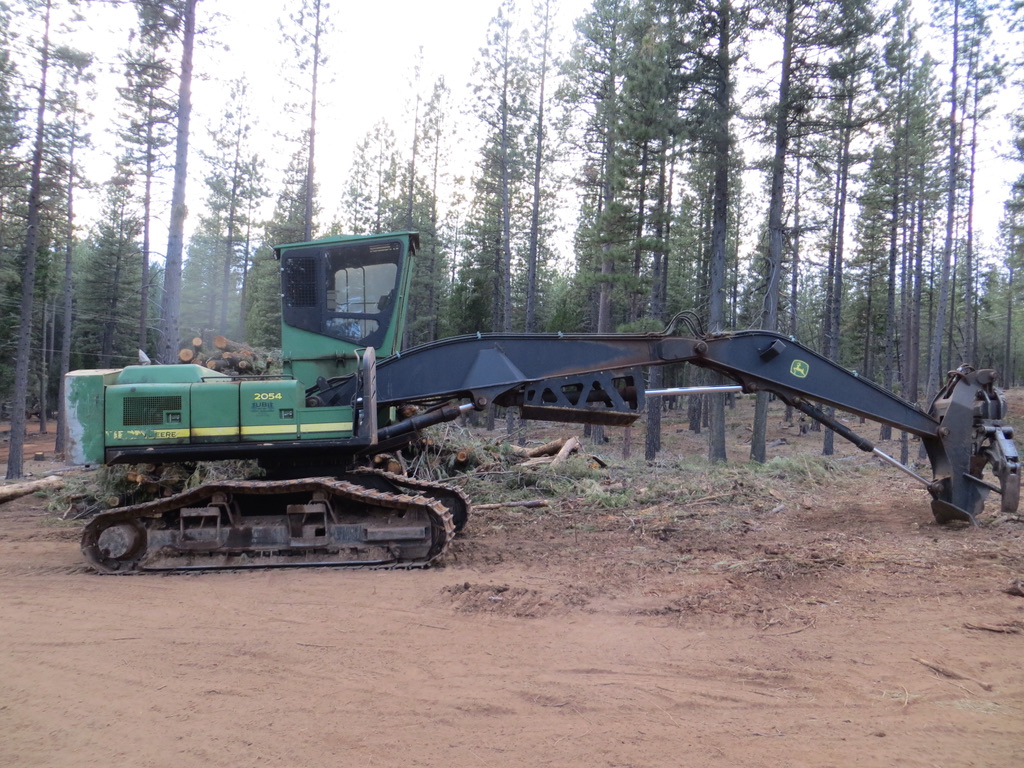
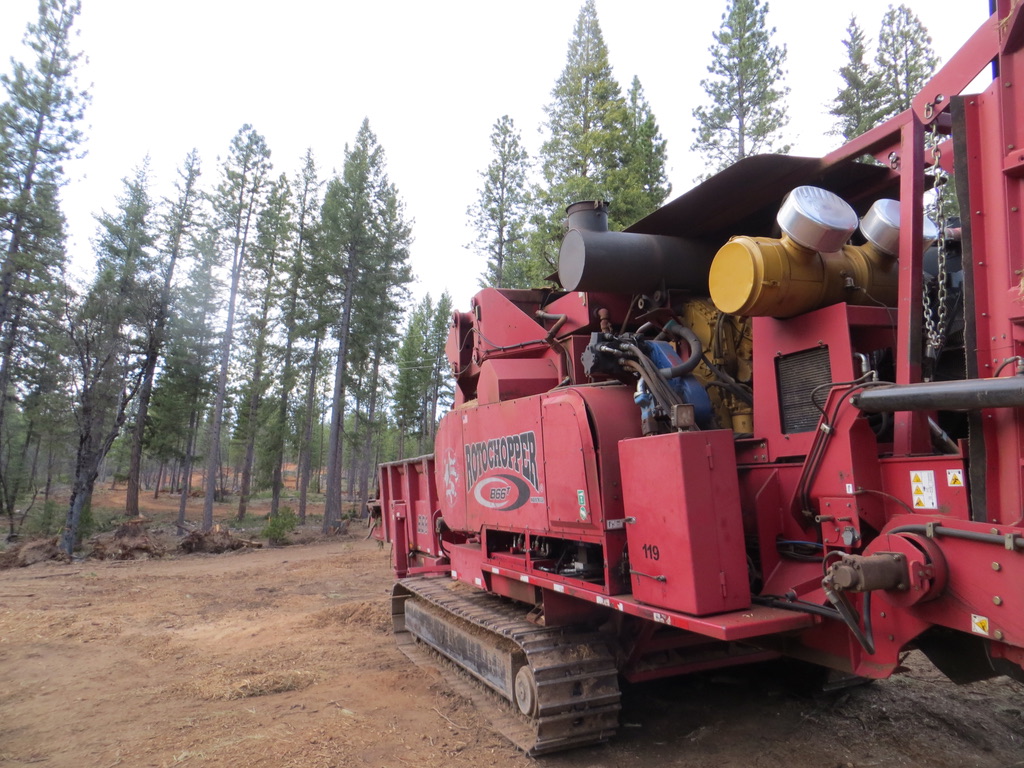
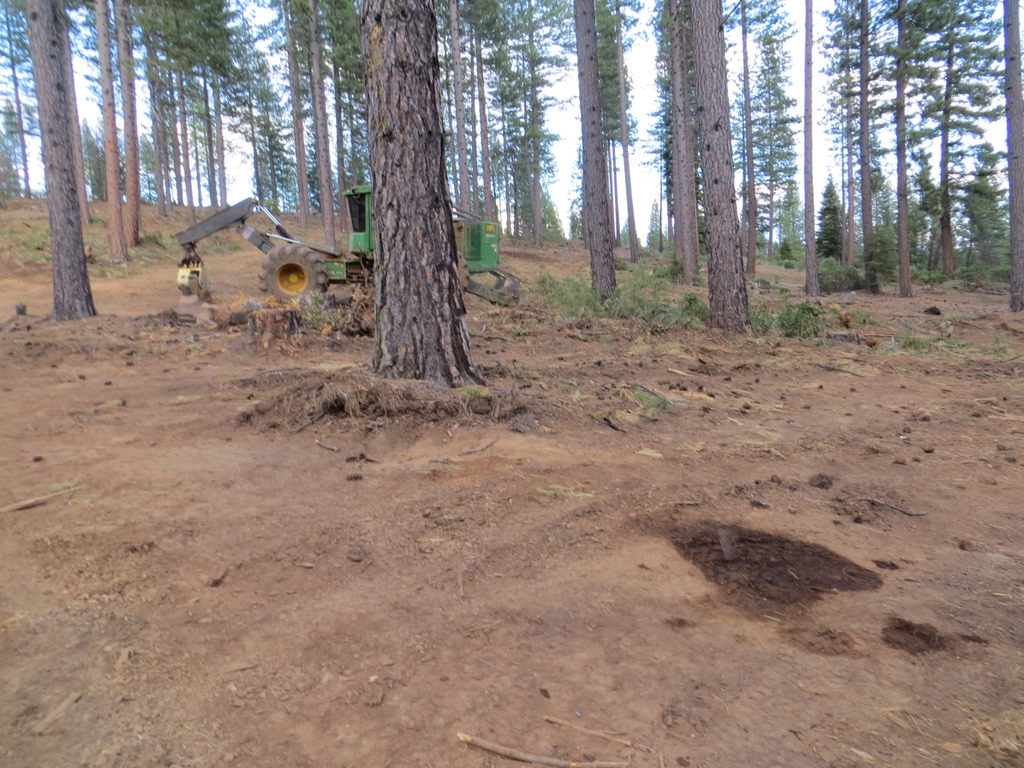
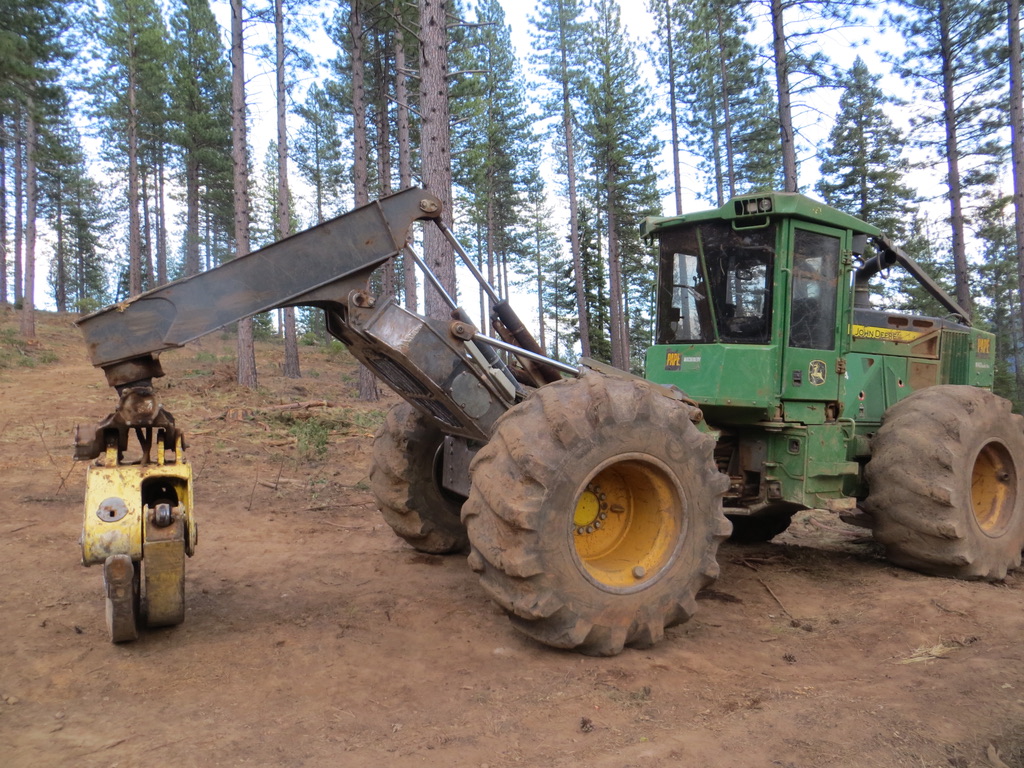
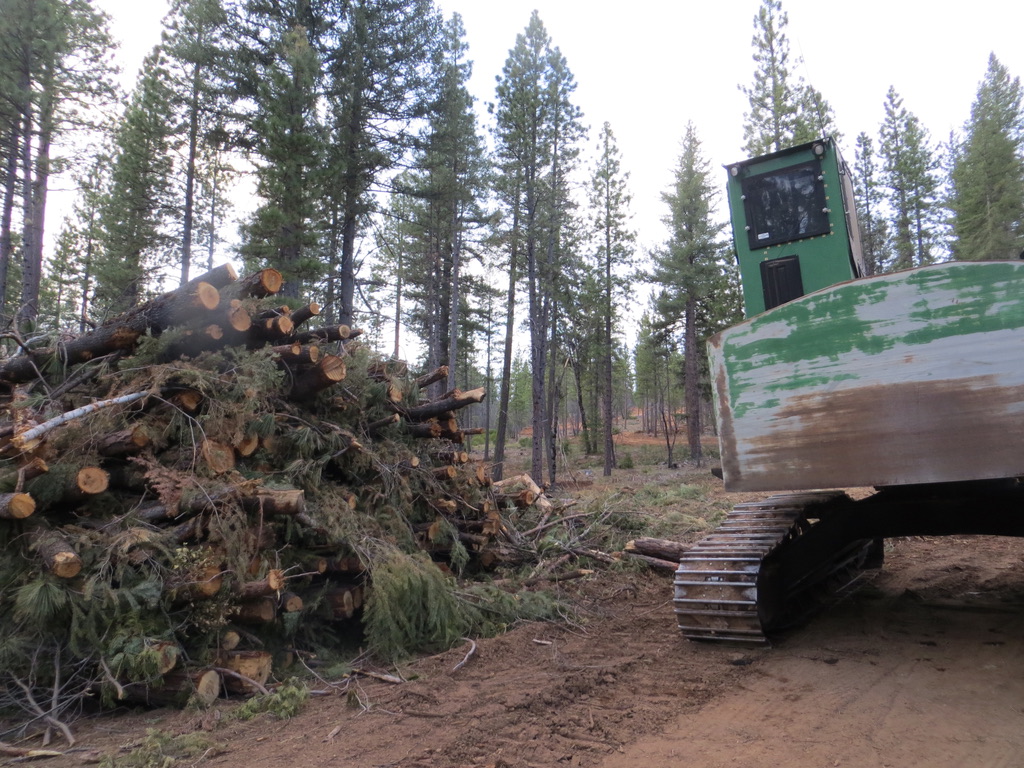
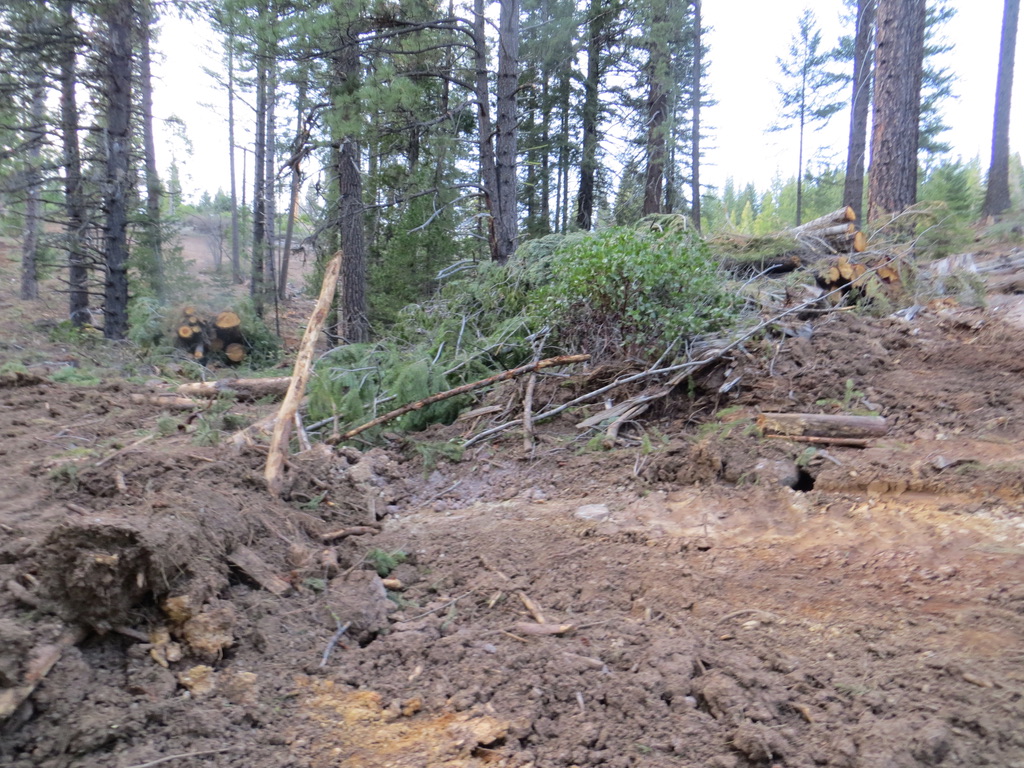
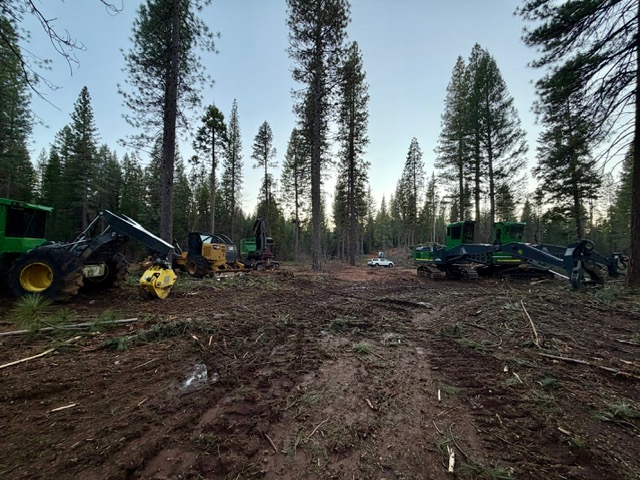
The below photos were taken Sunday March 22nd east of Quincy just east of Lee Summit, right off of Highway 70. This is part of the US Forest Service’s “Community Protection Project” that threatens 200,000+ acres in the area, unless we stop it with our lawsuit (hearing expected in May).
If you want to see what the Forest Service is planning for other Plumas County community’s forests, stop by and take a look. This is not “restoration”– this is heavy equipment causing industrial devastation to the forest. The disparity between the USFS detailed reports assuring respect will be given, and the reality of torn-up nature, is quite stark. When we were there in the evening, the forest was strangely silent– no birdsong or other typical sounds of the forest….
It is beautiful weather here in the Sierra (at least for the next few days)– more like May than March. Consider coming to Plumas County and helping us conduct forest surveys, and help us raise awareness about how forest “treatments” like this endanger the public through higher speed wildfires etc. We can recommend places to visit, and places to stay. It’s time to mobilize and stop this cancer from spreading across the landscape, especially into biologically rich and diverse areas.
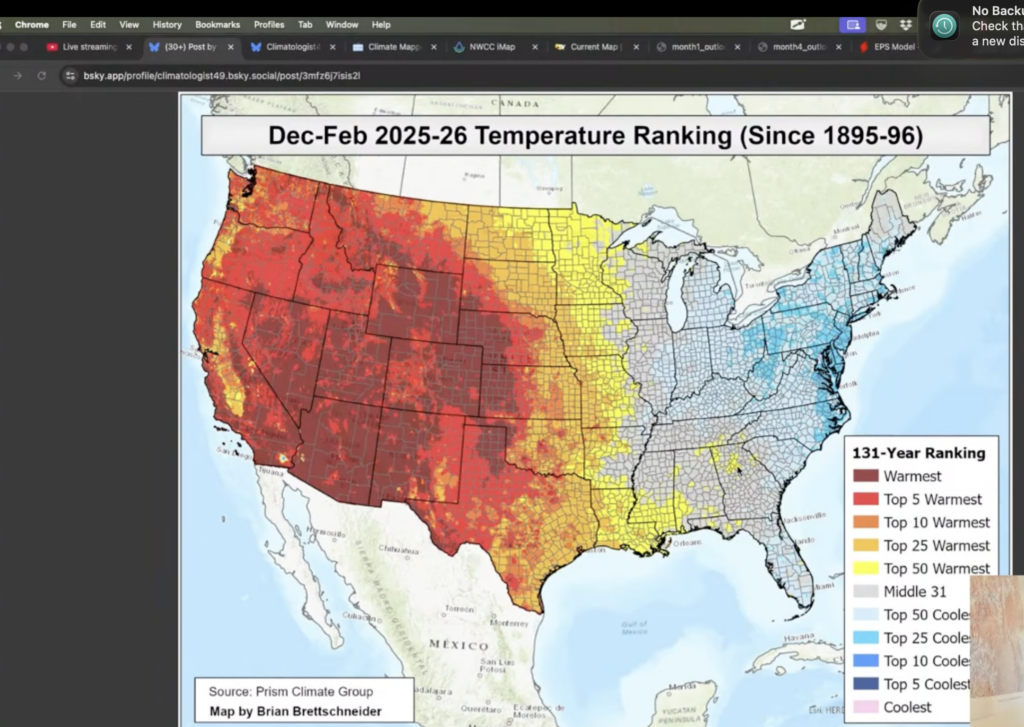
This winter was already the hottest on record for many places in the west…
The unprecedented spring heatwave in the southwest is about to get a lot worse, decimating already feeble sierra snow pack, and setting up Northern California mountain communities for a possibly severe fire season, making discussions and debates about community fire defense even more urgent.
Next Friday March 20th— the last day of what was once referred to as “winter.” — it’s predicted to hit 83F in Portola at 5000 feet elevation and 94F in Redding. Highs should stay in the eighties for several days.
Check out weather & climate expert Daniel Swain’s recent discussion of this likely record breaking (and lethal) heatwave. I can always gauge how bad the situation is by his tone, and he is visibly shaken and alarmed by these worsening climate developments.
A weasel, in the snowy environment such a coat evolved to blend in with..
A few days ago, I saw a weasel scurrying across a green and brown wetland meadow near the Feather River. Her coat was white, evolved over thousands of years of late winter snowpacks to blend in with and escape predators. Now, against the bare earth, and green plants, she stood out from the landscape, and she seemed to realize it, seeking out a pile of rocks with urgent curiosity. Like weasels, humans are also struggling to adapt to higher temperatures, especially at this time of year. We are all waking up and squinting to the new reality of living on a planet spinning faster and faster into truly dangerous territory.
I’d like to say government and quasi-government agencies are responding sensibly to this emergency: slashing emissions, setting aside forests, wetlands, and the moisture and carbon they lock up on the landscape, anything to throw the brakes on the climate freight train heading straight at us. I’d like to say we were urgently assisting (especially vulnerable) people to harden their homes and communities so loss of life is prevented during inevitable wildfires.
But that is sadly not the case.
Instead, the US Forest Service, CalFire, and other agencies have ramped up multi-billion dollar extreme logging plans in some of the wildest, remotest old growth forest remaining in the Sierra, pledging to kill and remove nearly 80% of the trees across vast swathes of wild lands, in the name of “forest management” and “forest resiliency”— using falsified data of past forest density to justify such an extreme intervention, while largely leaving rural communities to deal with the consequences.
We know from (actual science) that allowing the powerful evaporative effects of sun and wind into a forest canopy that is broken apart by heavy machinery disrupts the forest’s natural resilience, putting both forest communities and human communities at risk from droughts, floods, and storms, also dramatically increasing wildfire spread rates.
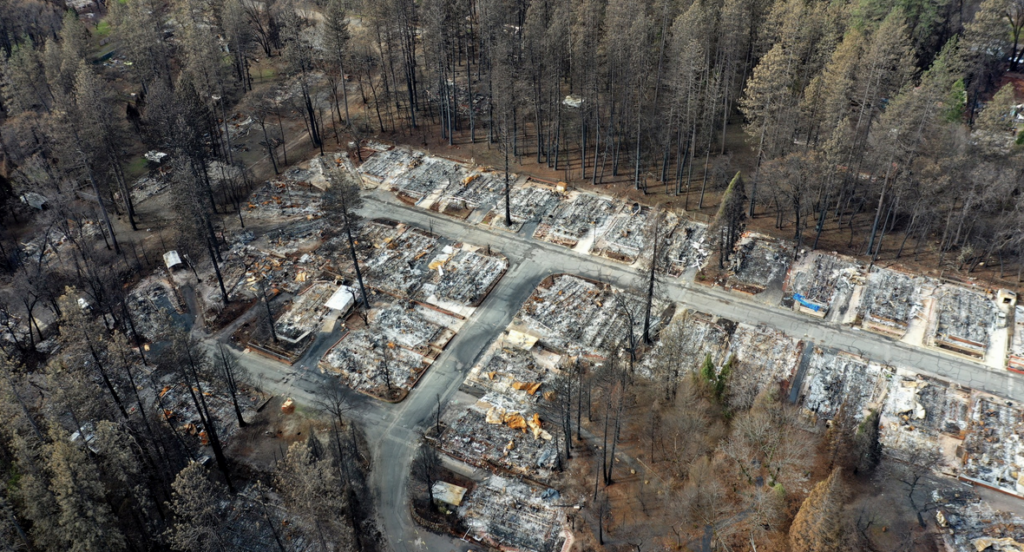
Homes burned in Paradise. Note living trees surrounding. If these homes had been hardened, using money that USFS paid to thin surrounding forest (that the fire raced through into town), they would still be there, and many fewer souls would have perished.
Greenville, Paradise, and other communities have already dealt with the consequences and false promises of thinning near their communities. How many more?
The USFS in particular is planning so many timber extraction projects on public land within and around the Plumas National Forest, it is hard to keep up (but we are trying!). These include:
— So-called “Community Protection” Project Central and West Slope (~218,000 acres)
— So-called “Community Protection” Project Eastside Project (~58,000 acres)
— North Forks (~167,000 acres)
— Tributaries (~163,000 acres)
— North Yuba Landscape Resilience Project (275,000 acres)
Total: ~881,000 acres (~ 1377 square miles!) For reference this is just over half the land area of Plumas County, and well over the total area of the state of Rhode Island.
Since the USFS has not provided a single map of these projects to help the public and decision makers understand the true overall impact, we thought it would be a good idea to make our own. If you gave mapping/ GIS skills and want to help us with this project, or are able to carry out forest surveys, please reach out!
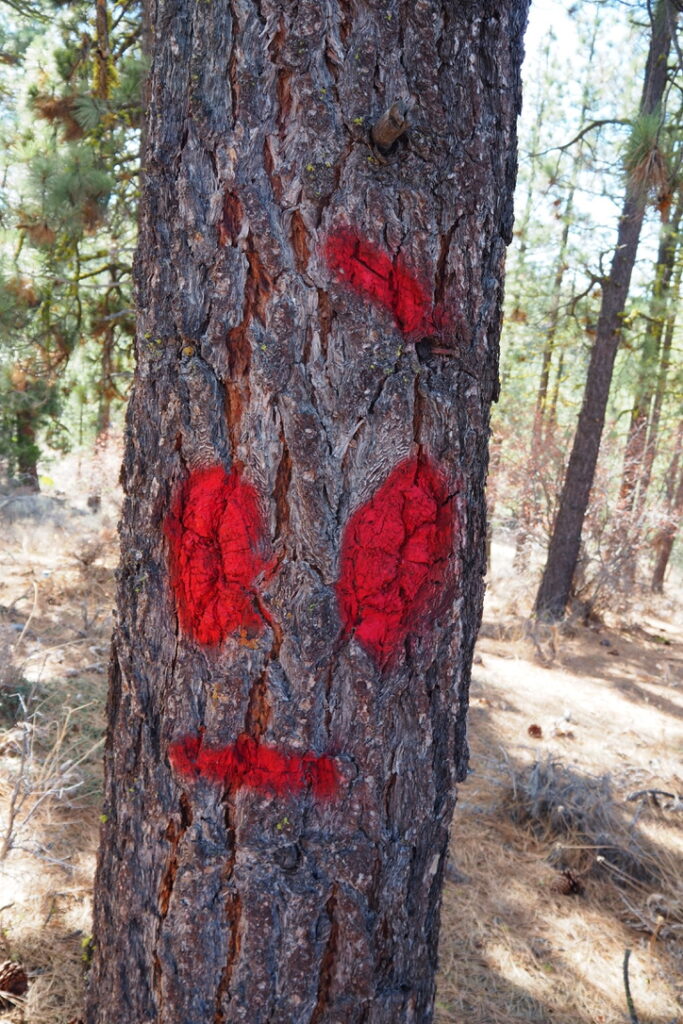
Trees marked to designate private land boundaries in preparation for landscape level logging.
By what is known as “piecemealing” one massive overarching plan to log the Sierra Nevada into separate projects, the Forest Service is attempting to obscure the scale of the impact of their overall logging plan on wildfire, community safety, climate, water quality, and survival of threatened species such as the California Spotted Owl.
Other non-governmental and quasi- governmental groups in the area are moving forward with their own logging plans, many of which are not undergoing any environmental review whatsoever. Many of these groups receive direct funding from the Forest Service and other (timber-industry captured) agencies.
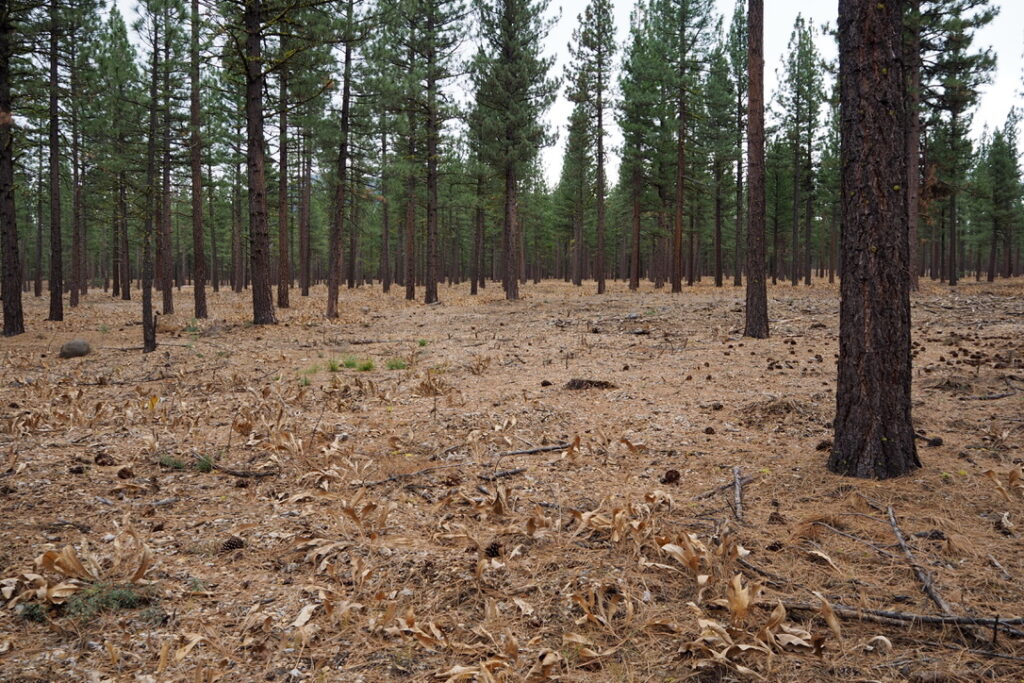
Likely what the “Fire Safe Council” is planning for East Quincy. Be Wary.
We suspect it is this failed approach they are pursuing, with heavy equipment set to damage the greenbelt in the name of “community safety.” Instead of improving fire safety, this kind of project instead sets up a disaster scenario where wildfires speed through thinned areas and slash piles into communities intentionally left unprotected by spending public money on logging instead of home defense.
I hope I am wrong. I hope the the Fire Safe Council is following best practices and scientific advice and prioritizing what science tells us are the most effective interventions: home hardening, pruning and defensible space around structures. If they want to go beyond that, perhaps respectful underburning (not pile burning which harms the land) and hand thinning of smaller trees in the immediate region around communities to aid fire defense would be appropriate.
We hope that is the case, but without additional information, we just have to assume the worst at this point.
— Will their project increase moisture in nearby forests, or decrease it?
— Will their project increase or decrease the spread rate of inevitable wildfire during high wind events?
— Will the project assist in providing defensible space and home hardening to the people of E. Quincy?
— What actual scientific evidence are they relying on that shows logging or brush removal farther than 200 ft. from structures has ANY EFFECT on the survival of those structures?
— What environmental (eg. CEQA/ NEPA) review is being carried out?
Please let us know if you hear back. I don’t see how continuing to refuse to provide information to the community (about projects that we pay for) is anything like a sustainable strategy for these groups.
Our mountain communities are made of kindling. Ember intrusion, ignition, and subsequent house to house spread— even as surrounding trees stay green and healthy— this is the biggest single cause of structure loss during a wildfire.
Wildfire– even high intensity wildfire– is a natural cycle, necessary for healthy forests. Though it may look devastating, the patchwork created by variable intensity wildfire is crucial for diverse habitat, and has been for millions of years.
Recent intensive logging in Greenhorn is set to spread across the region, with wildfire as the excuse.
Hacking away at vegetation in the forest in the name of fuel reduction may give some people a sense of control, and make quite a bit of money for some, but the reality is the embers don’t care a bit when they burn up the abandoned slash piles and send even more embers up to 2-3 miles from a flaming front, igniting a tinderbox community.
The results of all this are as predictable as they are preventable. If we funnel limited resources away from actual community hardening, and believe the lie that logging bare entire forests will prevent wildfire intrusion into communities, more people will die. It’s as simple as that.
And those who swallow and perpetuate the lie, because it’s easier than asking the tough questions and accepting that we may have gotten some things wrong, will have blood on their hands when their “forest management” results in wildfires speeding into communities, denying inhabitants time to evacuate.
Every public dollar flowing to “forest management” is a dollar that is not available for critical community hardening work. And it is making it much harder for animals like the weasel, who need shelter and habitat more than ever, but are finding it increasingly difficult to find it among the thinned tree plantations being created.
It’s a choice being made with your hard earned money— whether to respond effectively to climate collapse, or double down on the corporate corruption that led us to this place, waiving forest protections when we need them the most.
There’s a better way, and it starts at the home. Let’s unite around what really works to save lives and property, and not be misled by those who seek to hijack a true emergency to line their own pockets.
 UPDATE MARCH 30: Reports have come in over the weekend of intense industrial logging NW of Blaisden, CA going on now…